Xihe Drum
Introduction
The Xihe Drum, also known as "Dagu Shu", "Xihe Tune", is a traditional Chinese quyi (folk performance art) that combines storytelling and singing, accompanied by percussion and string instruments. Recognized as a National Intangible Cultural Heritage of China in 2008, it has roots in northern China, particularly in Hebei province and surrounding regions. This art form evolved during the Qing Dynasty (1644-1911), drawing from earlier traditions such as the "Wooden Board Drum" and "String Drum."
History
The origins of Xihe Drum trace back to the Qianlong reign of the Qing Dynasty, when performers Liu Chuanjing, Zhao Chuanbi, and Wang Lu first combined the Wooden Board Drum and String Drum in Baoding, Hebei province. Over time, the style was refined and popularized by prominent artists like Ma Sanfeng, whose innovation established Xihe Drum as a distinct genre. His student, Zhu Hualin (known as Zhu Daguang), further enriched the tradition, contributing significantly to its stylistic development.
By the late Qing period, Xihe Drum had gained widespread popularity, celebrated for its vivid storytelling and emotive performances. Artists such as Mao Ben, Wang Zaitang, and Zhang Shuanglai brought fame to both the genre and its repertoire. The art form’s name derives from its early association with Hejian county, reflecting its deep regional roots.
Artistic Features
Performance Style:
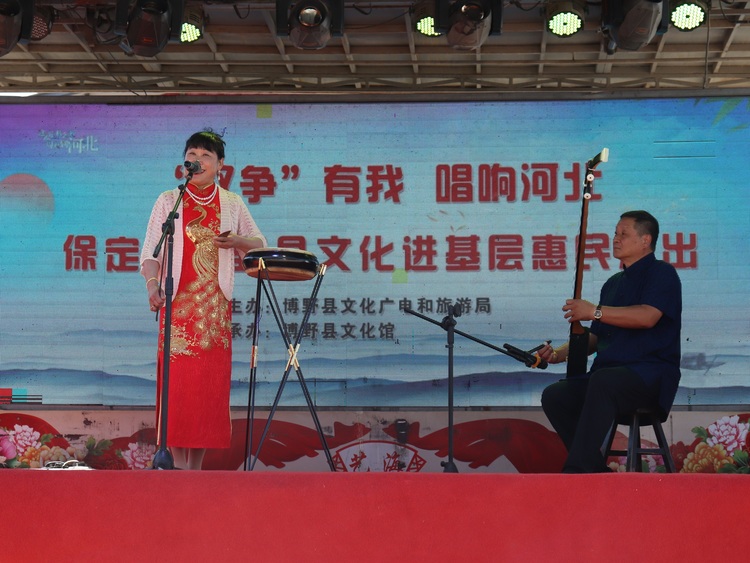
Xihe Drum is typically performed by one artist who sings and plays a small drum and copper clapper, accompanied by a three-stringed lute (sanxian).
The singing alternates between spoken narration and rhythmic, melodious segments, characterized by a straightforward yet robust style.
Performances are known for their clarity, emotional depth, and dramatic pacing.
Repertoire:
The traditional repertoire includes more than 150 medium- and long-length stories and over 370 shorter pieces. These works often revolve around historical events, legendary tales, and popular narratives.
Notable works include The Tale of the Mounted Bandits (Xiangma Zhuan) and The Household of Hu (Hu Jia Jiang), which are lauded for their intricate plots and engaging storytelling.
The language used in the performances is vivid and colloquial, enhancing accessibility and entertainment value.
Cultural Significance
The Xihe Drum holds an esteemed place in the cultural history of northern China. Its narratives preserve historical memory and folk wisdom, while its performance techniques have influenced other regional quyi forms. The combination of musicality, literary merit, and oral storytelling has made it a vital medium of cultural expression.
Photo Gallery(1 picture)CategoriesArtsTagIntangible Cultural HeritageChinese MusicRelatedShandong DrumCatalogue1. Introduction2. History3. Artistic Features4. Cultural Significance-
- []








